
Introduction: Beyond “Good Enough” Data Movement
In the high-stakes world of federal data management—where the Department of Defense (DoD) and Social Security Administration (SSA) operate—data movement is the lifeblood of mission success. However, many agencies are still tethered to legacy “architecture debt.”
Using aging replication tools or managed-code solutions (like Java or .NET) introduces layers of overhead and security vulnerabilities. To achieve true Federal-Grade Security, organizations must move toward C-Native Data Orchestration—a foundation built on transparency, performance, and decades of engineering expertise.
1. Peer-Vetted Technical Leadership
Trust in software starts with trust in its authorship. EDpCloud is not a “black-box” product from an anonymous conglomerate. It is engineered under the leadership of Aba El Haddi, a Senior Member of the IEEE and an ACM member with a professional pedigree spanning Government agencies, Universities, and Enterprises.
This background in high-performance computing (HPC) and mission-critical systems ensures that EDpCloud is built on peer-reviewed algorithmic principles, not just “convenient” coding practices. When you deploy EDpCloud, you are deploying software designed by architects who understand the zero-failure requirements of airborne nuclear detection systems and supercomputing environments.
2. The C-Native Advantage: Security by Subtraction
Most modern software is built on “bloatware” stacks. A typical Java-based replication tool requires a Java Virtual Machine (JVM), hundreds of third-party libraries, and constant patching of the runtime environment.
EDpCloud’s C-Native architecture takes the opposite approach:
- Reduced Attack Surface: By compiling directly to machine code, we eliminate the need for external runtimes. If the OS is hardened, EDpCloud is hardened as well.
- Memory Efficiency: Our engine manages memory at the bit level. This prevents the “garbage collection” pauses that plague Java tools, ensuring that real-time replication stays truly real-time.
- Direct System Integration: Built to run natively on OpenBSD, Linux, Windows, and Solaris, EDpCloud respects the security primitives of the host OS, such as non-executable stacks and memory protections (W^X).
3. Solving the DDIL Challenge (Denied, Disrupted, Intermittent, Limited)
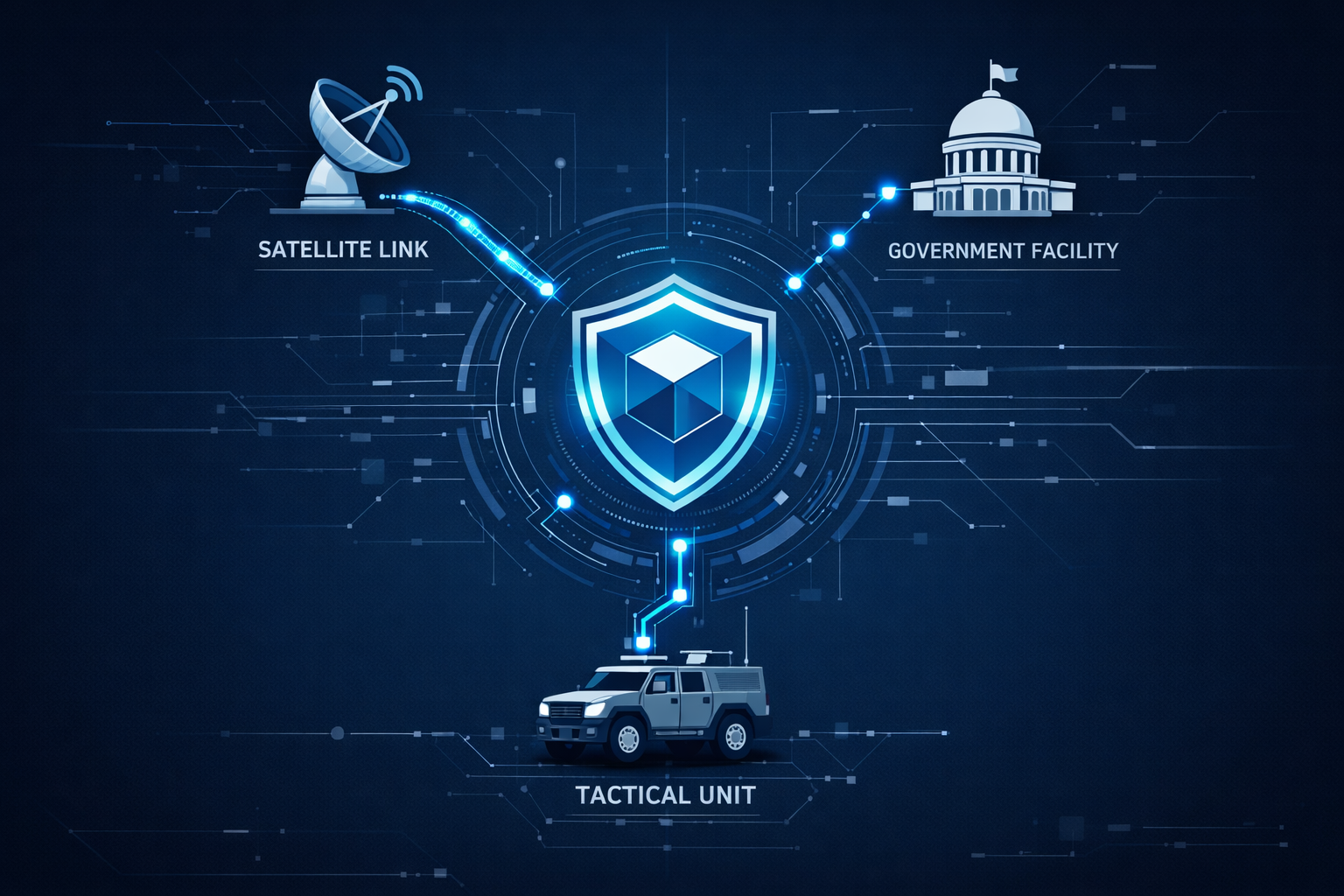
For tactical edge deployments, bandwidth isn’t just expensive—it’s unreliable. EDpCloud was engineered for DDIL environments.
- Store-and-Forward Resilience: Unlike basic “sync” tools that fail when a link drops, our engine stages data locally. When the satellite or radio link is restored, the transfer resumes exactly where it left off, ensuring 100% data integrity without manual intervention.
- Byte-Level Delta Transfers: We don’t send files; we send changes. By identifying only the specific bits that have mutated, we reduce bandwidth consumption by up to 90%, a critical factor for remote agencies.
For the full mechanism — journal-based resume, alternate-route failover, and exponential backoff — see Replicating Files Over DDIL Links.
4. Supply Chain Security: US-Developed, Vetted Code
Recent high-profile breaches have highlighted the danger of “black box” code and offshore development.
- US-Based, Vetted Development: EDpCloud’s core engine is developed and maintained in the United States, with every contribution vetted and contributor origin tracked — so you always know where your software’s code comes from. Full source code review is available to qualifying federal government agencies.
- Strong, Standards-Based Encryption: Data is protected end-to-end with AES-256 — the encryption algorithm approved by NIST under FIPS 197 — and TLS 1.3, securing data at rest, in transit, and during handoffs between heterogeneous systems. AES-256 is itself a FIPS-approved algorithm; EDpCloud’s cryptographic module does not currently hold its own CMVP FIPS 140-x certification. If your deployment requires a validated module under a specific control — for example, NIST SP 800-171’s SC.L2-3.13.11 — confirm that requirement with our engineering team before deployment.
5. Strategic Data Orchestration: Beyond Simple Replication
While “replication” is the physical act of moving bits, Strategic Data Orchestration is the intelligence that governs how, when, and where that data flows across the enterprise. For the modern CIO, simply copying files is no longer sufficient; they require a framework that handles the complexity of global, heterogeneous environments.
EDpCloud elevates data movement from a background utility to a strategic asset by providing:
- Centralized Policy Control: Orchestrate complex workflows across Linux, Windows, and Unix nodes from a single point of authority, ensuring a consistent security posture across the entire agency.
- Adaptive Path Selection: Automatically navigate the most efficient route for data, whether over high-speed fiber or high-latency satellite links, ensuring that mission-critical information arrives first.
- Conflict Resolution and Governance: Beyond simple syncing, our orchestration engine manages file versioning and multi-master conflicts, providing the data integrity required for large-scale federal decision-making.
By shifting from a “copy-paste” mindset to a data orchestration strategy, IT leadership can transform siloed data into a unified, resilient resource that is always ready for AI analysis and real-time operational response.
6. Legacy Migration: Leaving RepliWeb and Attunity Behind
The industry is reaching a tipping point. Legacy solutions are no longer receiving the security patches required to meet modern compliance standards. Organizations that continue to run these tools face significant security risks, including unpatched vulnerabilities and a lack of support for modern encryption protocols.
Our Migration Guide provides a roadmap for a drop-in replacement that preserves your existing workflows while upgrading your security posture to “Federal-Grade.”
Comparison: Legacy vs. C-Native Orchestration
| Feature | Legacy (RepliWeb/Attunity) | EDpCloud (C-Native) |
|---|---|---|
| Runtime | Managed/Java/Legacy | Native Binary (C) |
| Security | Deprecated Protocols | TLS 1.3 / AES-256 |
| Architecture | High Overhead / Bloated | Minimal Footprint / Hardened |
| Engineering | Often Global/Outsourced | 100% US-Based (US Pedigree) |
| DDIL Support | Limited/None | Full Store-and-Forward |
Conclusion: Data Resilience Built on Experience
Security is not a static state; it is a continuous process of hardening. By choosing a C-native foundation, agencies and enterprises aren’t just solving today’s sync problem—they are building a resilient, high-performance infrastructure capable of meeting tomorrow’s threats.
Ready to Harden Your Data Infrastructure?
Don’t let legacy “architecture debt” compromise your mission-critical data. Whether you are migrating from RepliWeb or architecting a new federal-grade sync strategy, our engineering team is ready to assist.
Prefer a direct line? Call our engineering office at (952) 746-4160 to discuss your specific synchronization requirements with a senior architect.
Share this Post